adhocmutations

adhocmutationsadhocmutationsadhocmutations

adhocmutations

adhocmutationsadhocmutationsadhocmutations

Theory of Ad Hoc Mutations: Stress-Directed Evolution

Theory of Ad Hoc Mutations: Stress-Directed EvolutionTheory of Ad Hoc Mutations: Stress-Directed EvolutionTheory of Ad Hoc Mutations: Stress-Directed EvolutionTheory of Ad Hoc Mutations: Stress-Directed Evolution

TAM links stress to the evolution of species through epigenesis, gene duplication, mutation, and recurrent natural selection.

Contact the Author
Explore the Theory

Theory of Ad Hoc Mutations: Stress-Directed Evolution

Theory of Ad Hoc Mutations: Stress-Directed EvolutionTheory of Ad Hoc Mutations: Stress-Directed EvolutionTheory of Ad Hoc Mutations: Stress-Directed EvolutionTheory of Ad Hoc Mutations: Stress-Directed Evolution

TAM links stress to the evolution of species through epigenesis, gene duplication, mutation, and recurrent natural selection.

Contact the Author
Explore the Theory

The Core Hypothesis

 TAM explores mechanisms of evolution in which persistent stress activates epigenetic responses that help organisms adjust. 

TAM proposes that these responses may favor gene duplication and adaptive mutations related to the stressed function. 

Natural selection may act throughout this evolutionary process whenever heritable variants affect survival or reproduction. 

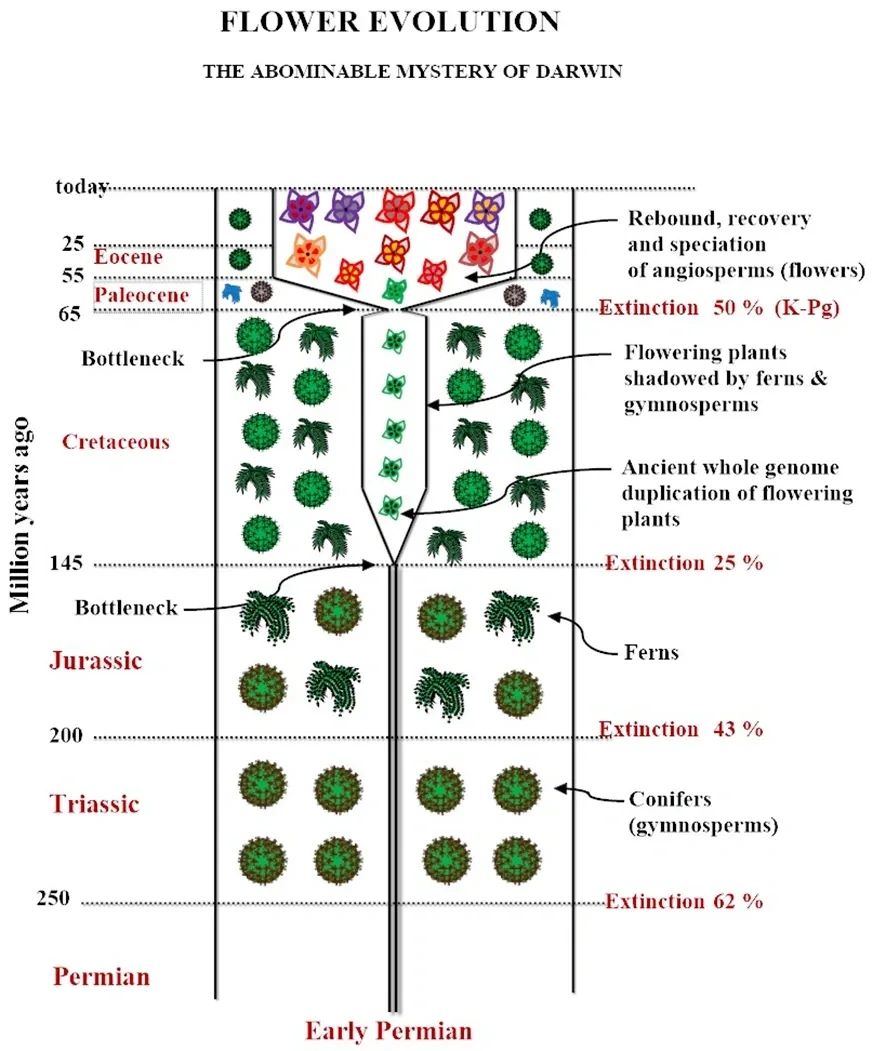
TAM: environmental stress, whole-genome duplication, and flowering-plant diversification.

Case Study: Flowering Plants

 Environmental upheaval can impose intense stress on plant lineages. TAM examines whether such stress may favor conditions associated with whole-genome duplication. 

 Genome duplication provides redundant genetic material that can diverge while essential biological functions are preserved. 

 Repeated genome duplications in flowering plants are associated with evolutionary innovation and diversification, an empirical pattern relevant to TAM. 

Environmental stress, gene duplication, and flowering-plant diversification.

The TAM Pathway

Environmental stress at the K–Pg boundary, illustrated by an asteroid impact and dinosaurs before th

1. Environmental Stress

1. Environmental Stress

1. Environmental Stress

 A persistent challenge—such as heat, toxins, scarcity, predation or disease—creates a specific functional demand. 

DNA with temporary epigenetic markers regulating gene expression in response to environmental stress

2. Epigenetic Response

1. Environmental Stress

1. Environmental Stress

 The organism first responds through reversible changes in gene expression, regulation and phenotype. 

Gene duplication creates an extra DNA copy, preserving the original gene while enabling evolutionary

3. Gene Duplication

1. Environmental Stress

3. Gene Duplication

 Under prolonged demand, duplication can provide an extra gene copy, preserving the original function while creating evolutionary freedom. 

Antibiotic resistance experiment illustrating stress-related ad hoc mutation and improved adaptation

4. Ad Hoc Mutation

5. Recurrent Natural Selection

3. Gene Duplication

TAM hypothesizes that, following gene duplication, stress-related mutations may occur preferentially in the duplicated copy, while the original gene preserves its essential function.  

Mathematical simulation showing how natural selection favors better-adapted lineages and increases t

5. Recurrent Natural Selection

5. Recurrent Natural Selection

5. Recurrent Natural Selection

 Natural selection may act repeatedly throughout the TAM pathway whenever heritable variants affect survival or reproduction. Across generations, it favors lineages better adapted to specific environmental pressures. 

Stress: The Hidden Algorithm of Evolution

 The book presents the Theory of Ad Hoc Mutations, proposing a testable pathway linking environmental stress, epigenetic response, gene duplication, mutation, and natural selection. 

Buy on Amazon

A Testable Evolutionary Theory

 The Theory of Ad Hoc Mutations proposes a testable pathway linking environmental stress to adaptive evolutionary change. 

Stress as an Evolutionary Signal

 Environmental stress activates epigenetic responses and creates functional demands that may guide subsequent adaptive change. 

Natural Selection Across the Pathway

The proposed pathway links epigenetic response, gene duplication, and ad hoc mutation, while natural selection may act repeatedly whenever heritable variants affect survival or reproduction. 

Contact the Author

Send a Scientific Inquiry

Este sitio está protegido por reCAPTCHA y aplican las Política de privacidad y los Términos de servicio de Google.

 Copyright © 2026 adhocmutations. All rights reserved. 

Con tecnología de

Este sitio web utiliza cookies

Usamos cookies para analizar el tráfico del sitio web y optimizar tu experiencia en el sitio. Al aceptar nuestro uso de cookies, tus datos se agruparán con los datos de todos los demás usuarios.

Aceptar